Grand Finale ~Perspective on the Trillion-Dollar Semiconductor Market~
Progress and Specific Policies of Various Countries
 East Hall 2


The semiconductor market is projected to reach a scale of $1 trillion by 2030. This growth is driven not only by technological innovation but also by global capital investment and the creation of new markets. In this context, the Japanese government is implementing unprecedented support for the semiconductor industry, aiming to rebuild the semiconductor ecosystem and establish a strong position in the global supply chain. Meanwhile, various countries are preparing for 2030 with their own unique policies. In the first part of the session, we will discuss the progress of government "basic strategies" and the future trend of the industry. In the second part, representatives from different countries will share their specific semiconductor policies.
Program Agenda
*Please note that the program may be subject to change.
Part1 "Towards the Development of the Japanese Semiconductor Industry: National Strategy 1-2-3 Fixed-point Observation"


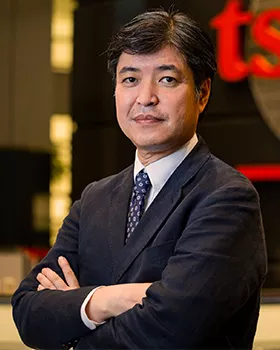
Japan Advanced Semiconductor Manufacturing (JASM)
In this presentation, we will provide an overview of Japan Advanced Semiconductor Manufacturing, Inc. (JASM), a company majority-owned by TSMC, its current progress, the specialty technologies JASM offers, and JASM's outlook in strengthening the semiconductor manufacturing and ecosystem in Japan.

With the increasing speed ad capacity of semiconductor I/O, the shift from electrical to optical data transmission is gaining attention. Optical transmission enables higher-speed, lower-power, and longer distance data communication. In this presentation, we will introduce our activities related to small optical transceivers, optical chiplets, that are compact enough to be integrated into semiconductor packages.
Part2 "Global Semiconductor Strategies: Unraveling Specific Policies and Trends"

KPMG FAS
Analyzing the industry value chain of semiconductors, technology strategies, investment strategies, and promotion policies in major countries, we reveal their comparative advantages. As the global supply chain is being reshaped, we seek potential ways for Japan to win, while looking at the relationships between North America, Europe, China, Taiwan, South Korea, and India.


Stage Sponsors